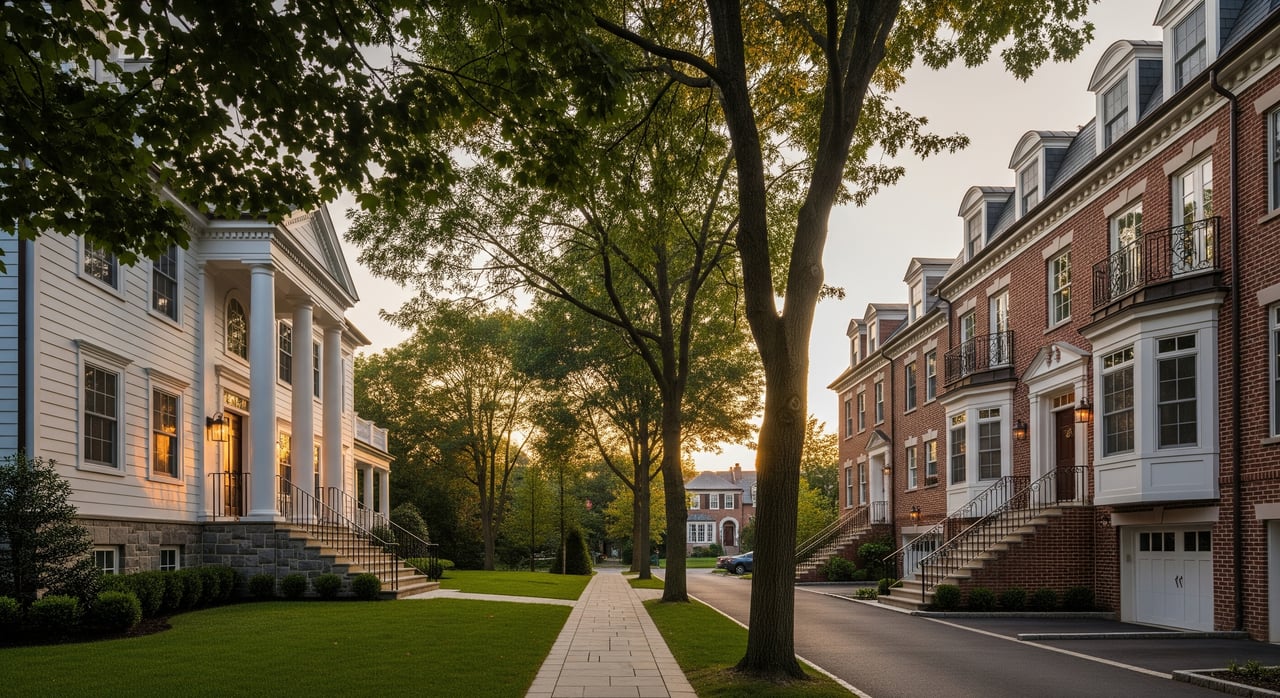
Trying to choose between a townhouse and a single-family home in Parsippany? You are not alone. Many buyers here weigh convenience, space, and total monthly cost before they decide. In this guide, you will learn how each option fits local realities like HOA fees, taxes, commute, and resale so you can make a confident choice. Let’s dive in.
Parsippany snapshot
Parsippany-Troy Hills offers a mix of single-family neighborhoods and townhouse communities across northern Morris County. You have quick access to I-80, I-287, and Route 46, plus NJ Transit bus service and nearby rail options, which attracts commuters to Newark and New York City. Most areas are car dependent, and you will see different trade-offs between townhome clusters near main roads and quieter single-family streets further from arterials.
Costs: price, taxes, HOA, insurance
Your total monthly cost will likely guide your decision. Look beyond the purchase price to compare property taxes, HOA fees, and insurance.
Purchase price realities
- Townhouses often provide a lower entry price than single-family homes of similar bedroom count. Larger or fully updated townhouses can overlap with smaller single-family homes on price.
- Inventory shifts during the year. Compare active listings and recent sold data in the township to see current ranges for both property types.
Property taxes in context
- New Jersey property taxes are high relative to national averages, and Morris County typically trends higher than the national median.
- Townhouses often have lower assessed values than comparable single-family homes, which can mean a lower annual tax bill. Actual taxes vary by assessed value, so always review the current tax card for a specific property.
HOA fees: what to check
Most Parsippany townhouses belong to a homeowners or condominium association. Fees commonly help cover exterior maintenance, landscaping, snow removal, common areas, and master insurance. In some communities, certain utilities may be included.
Ask these questions for any townhouse you consider:
- What exactly is covered in the monthly fee, and what is not?
- Is there a healthy capital reserve and recent reserve study?
- How often have fees increased over the last 3 to 5 years?
- Are there any special assessments in place or planned?
- What percentage of owners are delinquent on HOA dues?
Insurance differences
- Townhouse or condo owners typically carry an HO-6 policy for interior coverage. The association’s master policy generally covers exterior and common areas.
- Single-family owners insure the entire structure and the property. Premiums can be higher because you cover the full building and any outbuildings.
Maintenance and control
Townhouse maintenance
- Exterior upkeep is usually handled by the HOA. That often includes roofing, siding, landscaping, and snow removal, depending on the community.
- You trade some control for convenience. Architectural changes and even some interior modifications may need association approval.
Single-family maintenance
- You manage and fund all exterior and yard work. Expect periodic bigger-ticket items like roof replacement, driveway resurfacing, and tree care.
- You have control over timing and upgrades, which can suit owners who value flexibility or plan improvements.
Space, privacy, and outdoor living
- Single-family homes generally offer larger private yards, more separation from neighbors, and room for additions, decks, or pools, subject to township zoning.
- Townhouses often provide a patio or small yard plus shared green space. For some buyers, low-maintenance outdoor areas are ideal. For others, pets, gardening, or entertaining may point to a single-family yard.
Commute, transit, and daily convenience
- Townhouse communities near major roads can offer easier commutes, but you may experience more traffic and noise.
- Single-family neighborhoods off main corridors can feel quieter, though they might be further from bus stops or park-and-ride options.
- If you commute to Newark or NYC, map your likely routes to I-80, I-287, and Route 46, and check bus or nearby rail schedules that fit your work hours.
Resale and financing factors
Resale dynamics
- Single-family homes often draw the widest buyer pool and can benefit from strong long-term demand, thanks to yard space and flexibility for additions.
- Townhouses appeal to first-time buyers, downsizers, and commuters who want simpler maintenance. In low-inventory suburban markets, well-located townhouses can resell quickly.
Financing influences
- For townhouses in condominium-style associations, lenders may review HOA financials. Low reserves or high delinquency can limit certain loan types.
- Some communities may not be approved for FHA or VA. If you need one of these loans, verify the community’s status early in your search.
Who each option fits
Townhouse fit
- You prefer a lower-maintenance lifestyle and predictable exterior services.
- You want a lower entry price and are comfortable with HOA rules.
- You prioritize commute convenience and do not need a large yard.
Single-family fit
- You want more privacy, a larger yard, or room to expand.
- You are comfortable handling or hiring out maintenance on your own timeline.
- You want maximum flexibility for design, additions, or outdoor features.
Compare monthly cost the smart way
Use this simple template to compare two specific homes side by side. Plug in real numbers from current listings, tax cards, and your lender’s estimate.
- Mortgage payment
- Townhouse: Estimate principal and interest using your preapproval rate and the list price.
- Single-family: Do the same with the other property’s price.
- Property taxes
- Townhouse: Use the property’s current annual tax, divide by 12.
- Single-family: Same process.
- Insurance
- Townhouse: Use an HO-6 quote. Ask your agent or insurer for a townhome/condo estimate.
- Single-family: Get a homeowner’s policy quote for the full structure and property.
- HOA fee (if applicable)
- Townhouse: Add the monthly HOA or condo fee. Note what it covers.
- Single-family: Usually none, unless the neighborhood has a community association.
- Maintenance budget
- Townhouse: Set aside a smaller monthly amount for interior items and unexpected costs. Monitor HOA notices for fee changes and assessments.
- Single-family: Budget for yard care, snow removal, and long-term capital items like roof or driveway. Build a realistic reserve based on home age and condition.
- Total monthly estimate
- Add up each line for both properties to see the full monthly picture.
Tip: Revisit the totals with your lender’s DTI guidance and your comfort level. If the townhouse and single-family are close on monthly cost, use lifestyle and resale considerations as tiebreakers.
Schools and zoning notes
- School zoning can influence demand and pricing. Always verify a specific address with current Parsippany-Troy Hills Board of Education boundary maps.
- For single-family homes, check township zoning and permit requirements before planning additions, decks, or accessory structures.
- For townhouses, review HOA covenants and architectural guidelines for any planned changes.
HOA documents to review
For any townhouse or condo-style association, request and read:
- Covenants, Conditions and Restrictions or bylaws
- Budget, most recent reserve study, and insurance certificate
- Board meeting minutes for the past 6 to 12 months
- Delinquency rates and any special assessments
- Pet, rental, and alteration rules
These items help you assess financial health, potential fee changes, and everyday living rules.
Due diligence checklist
Use this quick checklist to stay organized:
- Compare mortgage, taxes, insurance, HOA, and maintenance on two specific homes.
- Confirm what HOA fees cover and whether reserves and budgets are healthy.
- Pull the latest property tax bill and assessed value for each address.
- Verify school assignment and commute times that fit your routine.
- Ask your lender about condo or HOA underwriting for any townhouse community.
- Consider your resale horizon and likely buyer for the property in 3 to 7 years.
Next steps in Parsippany
The right choice comes down to budget, maintenance comfort, space needs, and the community that fits your daily life. If you want a yard and flexibility, a single-family home may be best. If you value convenience and a more predictable monthly cost, a townhouse can be a great fit.
If you are comparing two specific properties, I am happy to help you break down total monthly cost, review HOA materials, and map commute and school options. For sellers, I can advise which updates deliver the best return and provide premium staging and photography to maximize your result.
Ready to make a confident move in Parsippany? Connect with Anne Henderson to request a complimentary home valuation or to compare your townhouse and single-family options.
FAQs
What are the main cost differences in Parsippany?
- Townhouses often carry HOA fees that cover exterior items, while single-family owners budget directly for yard and exterior maintenance; taxes and insurance also vary by property type and assessed value.
Do townhouses usually have lower taxes than houses?
- Often yes, because many townhouses have lower assessed values, but actual tax bills vary by property; always confirm the latest assessment and annual tax for the specific address.
How do HOA rules affect daily life?
- HOA rules can limit exterior changes, set maintenance standards, and govern pets or rentals; review covenants, meeting minutes, and budgets to understand expectations and financial health.
Is resale stronger for single-family homes in Parsippany?
- Single-family homes generally draw a broader buyer pool, which can support resale, but well-located and well-maintained townhouses also sell quickly in commuter-friendly suburbs.
What should I check before financing a townhouse?
- Ask your lender about HOA underwriting, including reserves, delinquency rates, and any FHA or VA approval considerations that could affect loan options and buyer pool.